business efficiency
ai & technology
erp integration
order processing automation
Operations leaders across manufacturing and distribution face the same constraint:
Manual order entry is inefficient, but large ERP projects are slow, expensive, and risky.
In 2026, organizations no longer need to choose between efficiency and disruption. With low-code ERP integration, it is now possible to begin automating orders without an IT overhaul, achieve agile ERP implementation, and deploy modern middleware for supply chain workflows in weeks instead of months.
This article explains how.
How can you automate PDF orders in SAP or Abacus without a 6-month IT project?
One of the most common questions from operations managers is:
“How can we automate PDF orders in SAP or Abacus without triggering a massive IT project?”
Historically, automation required:
Deep ERP customization
External consultants
Long testing cycles
Significant internal IT involvement
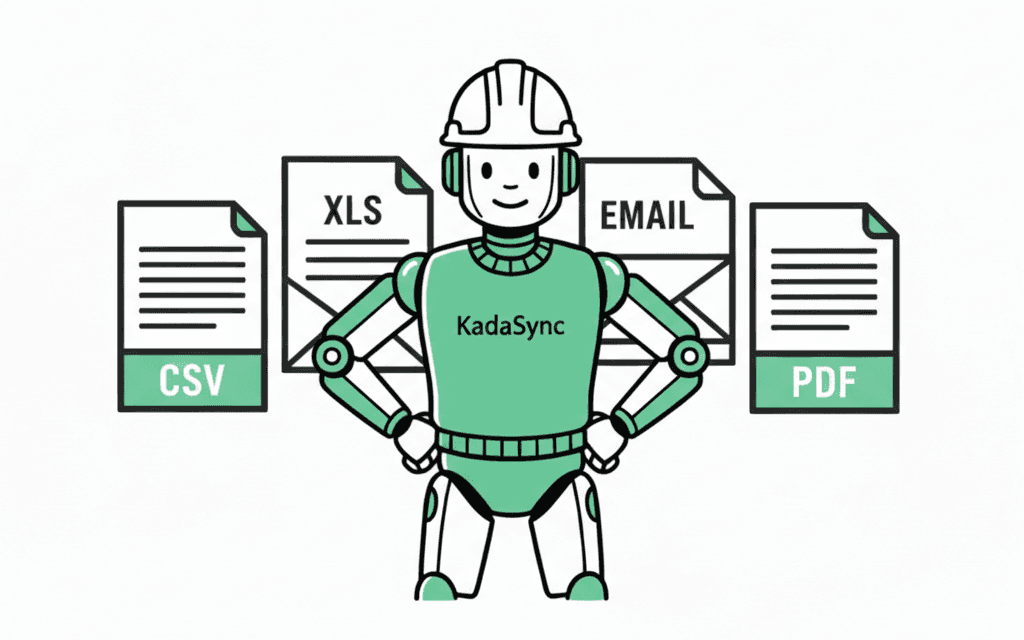
Today, modern platforms take a different approach. Rather than modifying the ERP, they operate as middleware for supply chain processes — sitting between incoming orders (email, PDF, attachments) and the ERP system.
This architecture allows organizations to:
Keep SAP or Abacus untouched
Avoid custom code
Maintain IT governance
Deploy in weeks rather than quarters
This is the practical foundation of automating orders without IT overhaul.
What is low-code ERP integration and why does it matter?
Low-code ERP integration refers to connecting new automation capabilities to existing systems using configuration rather than heavy engineering.
Instead of writing custom APIs or modifying ERP objects, low-code approaches rely on:
Prebuilt connectors
Configuration-based mappings
Lightweight authentication layers
Non-invasive integration patterns
The result is faster deployment, lower risk, and reduced dependency on specialized developers.
This approach is especially effective for order automation, where the ERP remains the system of record while external systems handle document interpretation and validation.
What is the difference between traditional ERP re-engineering and agile ERP implementation?
Traditional ERP automation projects typically attempt to redesign internal workflows, customize core logic, or rebuild entire order entry processes inside the ERP.
This approach is:
Slow
Expensive
Risky
Difficult to reverse
Agile ERP implementation, by contrast, focuses on adding intelligence around the ERP rather than inside it.
Instead of modifying SAP or Abacus:
External systems process incoming documents
Business rules are applied before data reaches ERP
ERP receives only clean, structured transactions
Core systems remain stable and protected
This model allows organizations to modernize capabilities while preserving the integrity of their existing infrastructure.
What does a practical 4-week deployment for order automation look like?
Modern automation projects succeed when they are structured for speed and low risk.
A typical phased approach looks like this:
Week 1: Controlled pilot environment
A limited set of documents (e.g. one customer’s orders) is processed in parallel with existing workflows.
No live ERP data is affected.
Week 2: Business logic alignment
Validation rules are configured:
Customer-specific part numbers
Pricing constraints
SKU mappings
Quantity validation
This ensures extracted data aligns with SAP or Abacus expectations.
Week 3: Low-code connectivity
The system connects to the ERP using lightweight integration methods.
Orders are transferred as drafts or reviewable transactions rather than final postings.
Week 4: Operational rollout
Once confidence is established, teams move from manual entry to review-first workflows, and automation gradually becomes the default.
This approach enables agile ERP implementation without disrupting daily operations.
Why waiting for a full ERP upgrade creates hidden operational costs
Many organizations delay automation because they are planning a future ERP upgrade.
However, this delay introduces ongoing, compounding costs.
Common hidden costs include:
Error remediation costs
Manual entry errors frequently cost $50–$100 per incident once they affect fulfillment.Cycle-time delays
Manual order processing often adds 12–24 hours to fulfillment timelines.Workforce inefficiency
Highly skilled employees spend disproportionate time on repetitive data entry.
These costs accumulate every month that automation is postponed, even while larger IT programs remain on long roadmaps.
How middleware for supply chain improves resilience and scalability
Modern order automation platforms increasingly function as middleware for supply chain workflows.
This layer sits between:
Customers and their ordering formats (emails, PDFs, attachments)
Internal systems of record (SAP, Abacus, other ERPs)
By doing so, organizations gain:
Flexibility to support diverse customer formats
Scalability without proportional headcount growth
Protection for core ERP systems
Faster onboarding of new customers
The ability to automate PDF orders in SAP without modifying SAP itself
This architecture is why many organizations are now modernizing order workflows even while keeping their core ERP unchanged.
Key takeaways for 2026
Low-code ERP integration makes automation accessible without heavy IT dependency
It is now practical to begin automating orders without IT overhaul
Agile ERP implementation reduces risk compared to traditional re-engineering projects
Using modern middleware for supply chain protects ERP stability while increasing flexibility
Organizations can automate PDF orders in SAP or Abacus within weeks, not months
Final perspective
ERP modernization no longer requires large, disruptive transformation programs.
The organizations moving fastest in 2026 are those that treat their ERP as a stable core system, while adding intelligent automation around it using low-code, middleware-based approaches.
This model delivers measurable gains in speed, accuracy, and scalability — without triggering the risks and delays of traditional IT overhauls.