business efficiency
ai & technology
order processing automation
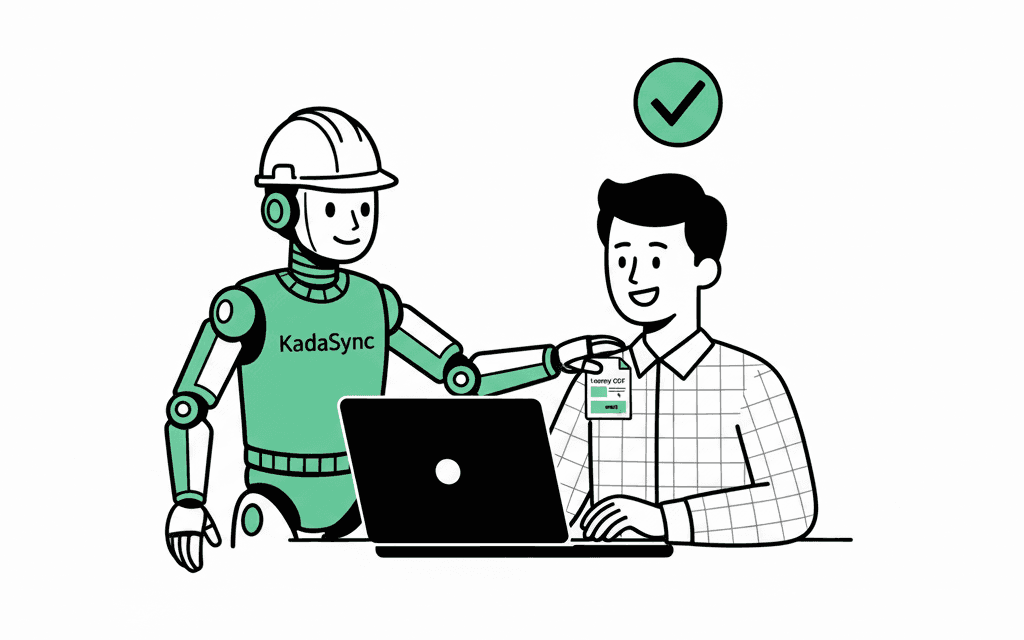
Many operations teams tried document automation years ago and walked away frustrated. Early OCR tools promised transformation but delivered fragile workflows, endless exceptions, and heavy manual oversight.
In 2026, the conversation has changed. The shift from legacy OCR vs IDP, the rise of agentic AI for document extraction, and the maturation of template-free document automation have fundamentally redefined what’s possible.
This article explains what changed, why earlier tools failed, and why modern systems now deliver measurable value.
What is the difference between legacy OCR and Intelligent Document Processing (IDP)?
Understanding the difference between legacy OCR vs IDP is essential.
Traditional OCR (Optical Character Recognition) focuses primarily on:
Converting images into text
Reading characters based on fixed coordinates
Relying on rigid templates
Intelligent Document Processing (IDP) goes further by adding:
Contextual understanding of language
Layout reasoning across diverse formats
Semantic extraction of meaning
Continuous learning from feedback
This difference explains why early OCR deployments often failed in real-world B2B environments, while modern IDP systems perform reliably across unstructured inputs.
In practical terms
Legacy OCR says:
“Read whatever appears inside this box.”
IDP systems say:
“Understand what this document is, identify key concepts, and extract meaning regardless of layout.”
This shift unlocks most of the modern Intelligent Document Processing benefits organizations now experience.
Why does legacy OCR fail on real-world B2B documents?
Legacy OCR was built for structured environments. B2B documents are rarely structured.
Common failure patterns include:
Layout changes across suppliers
Skewed or low-quality scans
Multi-page PDFs with inconsistent formats
Handwritten notes
Missing or duplicated fields
Non-standard terminology
Because traditional OCR relies heavily on templates, every layout variation requires:
Creating a new template
Maintaining that template
Manually correcting extraction errors
Continuous rule tuning
This dependency on rigid structures is exactly why many organizations abandon early automation initiatives after pilot phases.
What are the benefits of Intelligent Document Processing in 2026?
Modern platforms built on IDP deliver clear, measurable Intelligent Document Processing benefits, including:
Significantly higher extraction accuracy
Reduced dependency on document templates
Faster onboarding of new suppliers
Lower operational overhead
Improved resilience to document variation
Scalable performance across formats
Unlike legacy systems, IDP models do not break when vendors move logos, reorder fields, or change formatting. They reason about content rather than relying on positional assumptions.
This is why many organizations now view IDP as infrastructure rather than experimentation.
How agentic AI improves document extraction accuracy
A key advancement behind modern IDP platforms is the emergence of agentic AI for document extraction.
Agentic systems differ from simple automation models in that they:
Reason about the document as a whole
Understand semantic relationships between fields
Validate outputs against internal logic
Detect when information is missing or contradictory
Escalate uncertainty rather than guessing
For example, when reviewing an invoice:
The system understands the relationship between line items, totals, taxes, and dates
It recognizes that “Due Date” and “Invoice Date” represent different concepts
It can identify inconsistencies between subtotal, tax, and final total
This reasoning capability is what separates “character recognition” from true understanding.
Why human-in-the-loop accuracy remains essential
Even advanced systems benefit from structured oversight. This is where human-in-the-loop accuracy plays a critical role.
Rather than relying on humans to correct everything, modern HITL systems work selectively:
The AI processes the vast majority of documents automatically
Only low-confidence fields are flagged for review
Reviewers see precisely what needs validation
Corrections are fed back into the system to improve future performance
This model delivers two advantages:
High operational trust (teams know errors are caught)
Continuous system improvement over time
Organizations using this approach frequently achieve 99%+ accuracy while keeping human effort focused only where it adds real value.
Why template-free document automation changes the economics
One of the most impactful innovations in recent years is template-free document automation.
Template-free systems:
Do not require vendor-specific layouts
Do not require manual configuration per document type
Do not break when layouts change
Scale across thousands of formats automatically
This removes the largest hidden cost of traditional OCR programs:
the ongoing burden of template maintenance.
As a result, automation initiatives that previously stalled due to maintenance overhead are now becoming sustainable, scalable operational capabilities.
Legacy OCR vs IDP: Structural comparison
Capability | Legacy OCR | Modern IDP |
|---|---|---|
Setup effort | High (manual templates) | Low (model-driven) |
Adaptability to new layouts | Poor | Strong |
Dependence on rigid rules | High | Low |
Handling of messy inputs | Weak | Robust |
Accuracy without oversight | Limited | High |
Human involvement | Constant correction | Targeted validation |
Long-term scalability | Difficult | Designed for scale |
This structural shift explains why organizations that previously failed with OCR are now succeeding with IDP.
Key takeaways for 2026
The gap between legacy OCR vs IDP is fundamental, not incremental
Modern Intelligent Document Processing benefits include resilience, scalability, and higher accuracy
Agentic AI for document extraction enables systems to reason, not just recognize
Human-in-the-loop accuracy provides trust without reintroducing manual burden
Template-free document automation removes the primary scaling constraint of older systems
Final perspective
Early OCR tools failed not because automation was a bad idea, but because the technology was incomplete.
In 2026, document automation has shifted from brittle pattern matching to systems capable of contextual understanding, adaptive reasoning, and intelligent collaboration with humans.
For organizations revisiting automation today, the results are no longer experimental — they are operational.