business efficiency
ai & technology
order processing automation
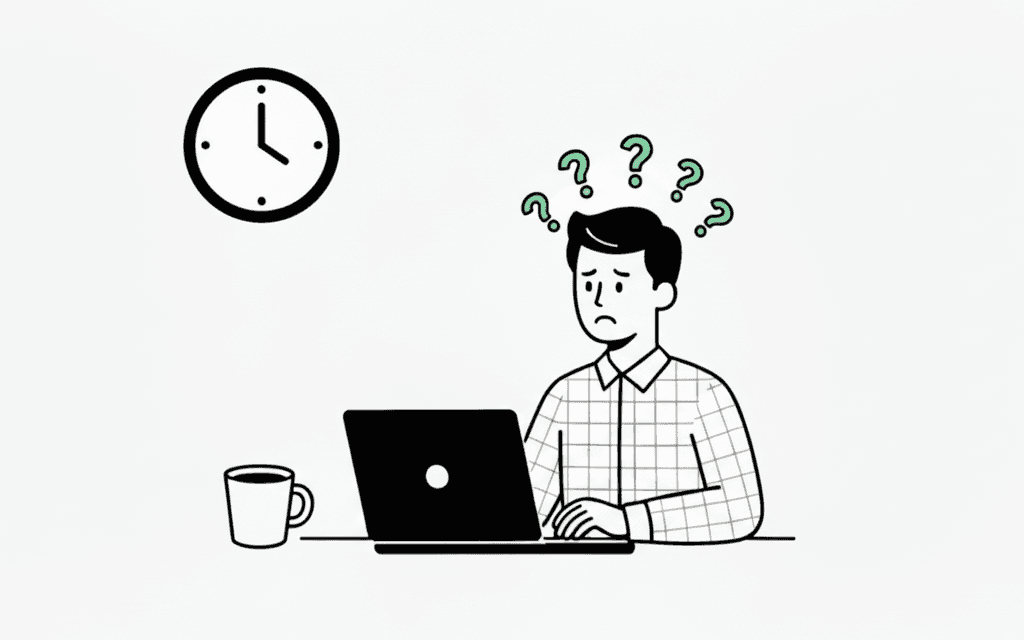
As digital transformation accelerates across manufacturing and wholesale, many organizations are re-evaluating B2B customer portal adoption rates, questioning why customers won’t use web portals, and searching for better models of frictionless B2B ordering.
In 2026, leaders are realizing that improving customer experience in wholesale distribution is no longer about adding more interfaces — it’s about removing friction altogether.
This article provides clear, executive-level answers to the most common questions.
Why are B2B customer portal adoption rates stalling in 2026?
Despite years of investment, B2B customer portal adoption rates remain lower than most organizations expect.
The primary cause is what many teams now describe as portal fatigue. From the seller’s perspective, portals represent efficiency. From the buyer’s perspective, they often represent:
Another login to manage
Another interface to learn
Another workflow disconnected from their daily tools
Another system competing with their own ERP and inbox
Procurement managers today already manage dozens of supplier relationships. Every additional portal increases cognitive load, security risk, and administrative overhead. As a result, even well-designed portals struggle to achieve consistent voluntary adoption.
Why customers won’t use web portals (even when they want digital ordering)
It is a mistake to assume that low portal adoption means buyers reject digital ordering. The issue is not digital behavior — it is forced behavior change.
The most common reasons why customers won’t use web portals include:
The login and password barrier
Each new portal introduces new credentials, password policies, and MFA requirements. For buyers managing dozens of vendors, this becomes a security and usability burden rather than a benefit.
Workflow disruption
Most buyers operate from two primary environments:
Their email inbox
Their internal ERP or procurement system
Portals force them to leave both environments, re-enter data, and duplicate effort — which feels like unpaid administrative work.
Training and learning overhead
Even simple portals require time to learn. Buyers consistently report that they do not have the bandwidth to master a different interface for every supplier they work with.
The result: portals are often used only when required, not because they are preferred.
What does frictionless B2B ordering actually mean in 2026?
Frictionless B2B ordering does not mean “a faster portal.”
It means no behavioral change is required from the customer.
In practice, frictionless ordering means:
Customers can order using email or existing formats
No new logins are introduced
No training is required
No duplicate data entry is expected
Orders flow reliably into the supplier’s systems
Instead of asking buyers to adapt to the supplier’s process, modern platforms adapt to the buyer’s existing behavior.
Kadasync follows this model by using AI-based document and email processing to transform unstructured customer orders (emails, PDFs, attachments) into structured ERP-ready data — without requiring the customer to touch a portal at all.
Portal-based ordering vs. frictionless ordering models
The difference between traditional portals and frictionless approaches is not cosmetic — it is structural.
Capability | Portal-Based Model | Frictionless Ordering Model |
|---|---|---|
Customer access | Requires login and credentials | No login required |
Interface | Customer must learn supplier UI | Customer stays in email / existing workflow |
Behavior change | High | None |
Adoption effort | Requires training and enforcement | Automatic |
Long-term adoption | Often inconsistent | Naturally high |
Customer effort | Moderate to high | Minimal |
This structural difference is why many organizations see stagnant portal usage even after investing heavily in design and features.
Why customer experience in wholesale distribution is shifting toward “invisible UI”
Modern customer experience in wholesale distribution is increasingly shaped by one principle:
The best interface is the one the customer does not have to think about.
Buyers consistently prioritize:
Reliability
Speed
Low effort
Predictability
They are not necessarily asking for richer dashboards or more features. They are asking for fewer steps, fewer logins, and fewer disruptions to how they already work.
This is why many organizations are shifting away from “portal-first” strategies toward systems that operate invisibly in the background — capturing orders from email, validating data automatically, and updating internal systems without requiring the customer to engage with another platform.
Key takeaways for 2026
B2B customer portal adoption rates remain limited when portals require behavioral change
The core reason why customers won’t use web portals is friction, not lack of digital maturity
Frictionless B2B ordering succeeds because it adapts to customer behavior instead of trying to retrain it
Improving customer experience in wholesale distribution increasingly means removing interfaces, not adding them
Systems that work through existing channels (like email) consistently outperform systems that require new logins
Final perspective
The competitive advantage in 2026 is not who builds the best portal.
It is who becomes the easiest supplier to transact with.
Organizations that eliminate friction — rather than asking customers to adopt yet another system — earn higher loyalty, higher order consistency, and stronger long-term relationships.
The future of B2B ordering is not more screens.
It is fewer obstacles.